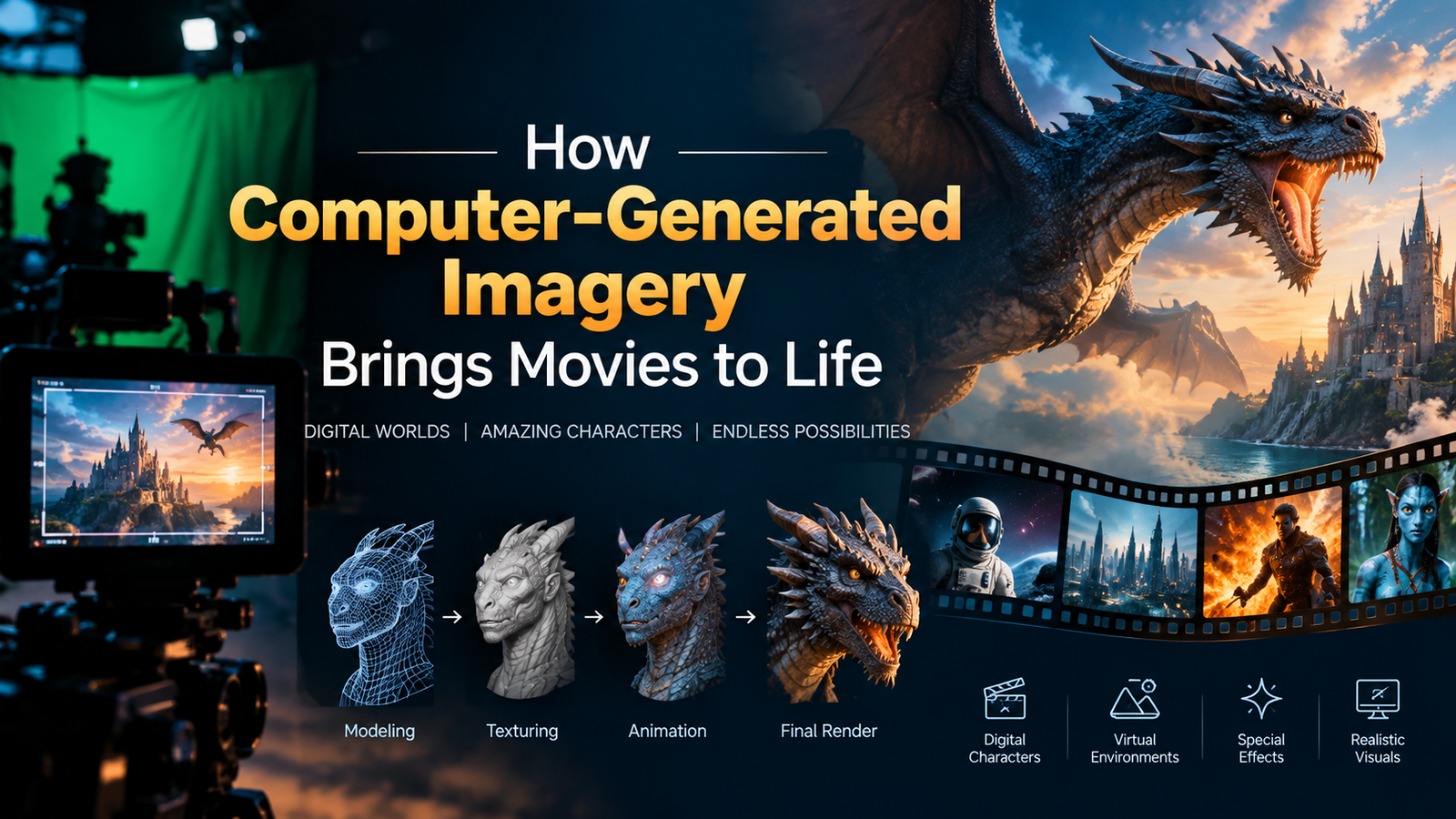
Movies today can take audiences to completely imaginary worlds, show incredible creatures, and create scenes that would be impossible to film in real life. Much of this magic comes from Computer-Generated Imagery (CGI).Generated Imagery Brings Movies to life by helping filmmakers turn creative ideas into realistic and engaging visuals.
The phrase “Generated Imagery Brings Movies” perfectly describes how digital technology helps filmmakers turn creative ideas into realistic visuals on the big screen.
What Is Computer-Generated Imagery?
Computer-Generated Imagery, commonly known as CGI, refers to images, characters, objects, and environments created using computer software. Instead of capturing everything with a physical camera, filmmakers can create digital elements and combine them with real footage.
Generated imagery brings movies closer to the imagination of filmmakers by allowing them to create objects, characters, and environments that may be difficult or impossible to film in real life.
How Does CGI Work?
Creating CGI is a detailed process that involves several stages. Artists and technicians use specialized computer software to design and animate digital elements. These techniques show how generated imagery brings movies to life through digital technology.Generated Imagery Brings Movies to life by giving filmmakers the ability to create things that would be difficult, expensive, or impossible to film physically.
1. Modeling
The first step is usually 3D modeling. Artists create the shape of a character, object, building, or environment in a digital space.
For example, if a filmmaker wants to create a fictional creature, artists first build its digital model.
2. Texturing
After modeling, artists add colors, patterns, and surface details. This process is called texturing.
Textures help make digital objects look realistic. Skin, metal, wood, stone, and clothing can all have different textures.
3. Animation
The next step is animation. Digital characters and objects are given movement so they can interact with the environment.
Animators carefully control movements such as walking, running, jumping, or facial expressions.
4. Lighting
Lighting is extremely important because it makes CGI look believable. Artists add digital lights and shadows that match the lighting of the real scene.
Good lighting helps digital objects blend naturally into live-action footage.
5. Rendering
Finally, the computer processes the digital models, textures, animation, and lighting to produce the final images. This process is called rendering.
Depending on the complexity of a scene, rendering can require a significant amount of computing power.
How Generated Imagery Brings Movies to Life
The biggest advantage of CGI is that it allows filmmakers to create things that would be difficult, expensive, or impossible to film physically.
A movie can use CGI to create:
- Imaginary creatures
- Futuristic cities
- Space environments
- Historical locations
- Superhero abilities
- Large-scale destruction
- Digital characters
- Fantasy worlds
- Realistic visual effects
This is why generated imagery brings movies closer to the imagination of filmmakers. A director can imagine something completely fictional and work with visual artists to bring that idea onto the screen.
CGI and VFX: Are They the Same?
CGI and VFX are related, but they are not exactly the same.
CGI specifically refers to images or visual elements created digitally using computers. Visual Effects (VFX) is a broader term for techniques used to create or modify visuals that would be difficult to capture during normal filming.
CGI is therefore often one part of the larger VFX process.
Together, these technologies demonstrate how Generated Imagery Brings Movies into imaginative and visually impressive worlds..
Why Is CGI Important in Modern Movies?
CGI gives filmmakers greater creative freedom. Instead of being limited to what can physically be built or filmed, filmmakers can create almost any environment or character they can imagine.
CGI can also help make storytelling more immersive. A realistic digital environment can make audiences feel as though they are visiting another planet, entering a fantasy kingdom, or witnessing an event from another time.
Another important advantage is that CGI allows filmmakers to make changes after filming. Digital elements can be adjusted, improved, or replaced during post-production.
The Future of CGI
Technology continues to improve, and CGI is becoming more detailed and realistic. Better computer hardware, advanced animation software, artificial intelligence, and new filmmaking techniques are helping artists create increasingly complex digital scenes.
Through this technology, generated imagery brings movies closer to the creative vision of directors, writers, and visual artists.
Conclusion
Computer-generated imagery has completely changed the way movies are created. It allows filmmakers to turn imaginative ideas into visual experiences that can entertain and amaze audiences.
From creating digital characters to building entire worlds, generated imagery brings movies to life in ways that were once impossible.
Primary keyword: Generated Imagery Brings Movies
Suggested SEO title: How Computer-Generated Imagery Brings Movies to Life
Suggested slug: computer-generated-imagery-brings-movies-to-life
Meta description: Discover how computer-generated imagery brings movies to life through digital characters, environments, animation, lighting, and visual effects. https://kakshaclasses.com/